HuaFang Bags: Your Reliable Partner for Quality Wholesale Bags.
Language
HuaFang Bags: Your Reliable Partner for Quality Wholesale Bags.
Sustainable Bag Sourcing: How to Verify Eco-Friendly Manufacturing at Scale
What Makes a Bag Truly Sustainable?
GRS vs RCS Certification: Key Differences
Why Major Brands Require GRS?
Eco-Friendly Material Selection Guide (By Bag Type)
Hidden Costs of Green Manufacturing
Conclusion
Sustainable Bag Sourcing: How to Verify Eco-Friendly Manufacturing at Scale
In today’s global market, more and more brands are seeking sustainable bag manufacturers and eco-friendly bag suppliers that can deliver large-scale production while ensuring environmental responsibility. This guide covers everything from material selection and production processes to certification standards, helping you make reliable decisions across your supply chain.
What Makes a Bag Truly Sustainable?
A truly sustainable bag is not only made from eco-friendly materials but also produced through low-carbon, efficient processes.
1. Material Dimension
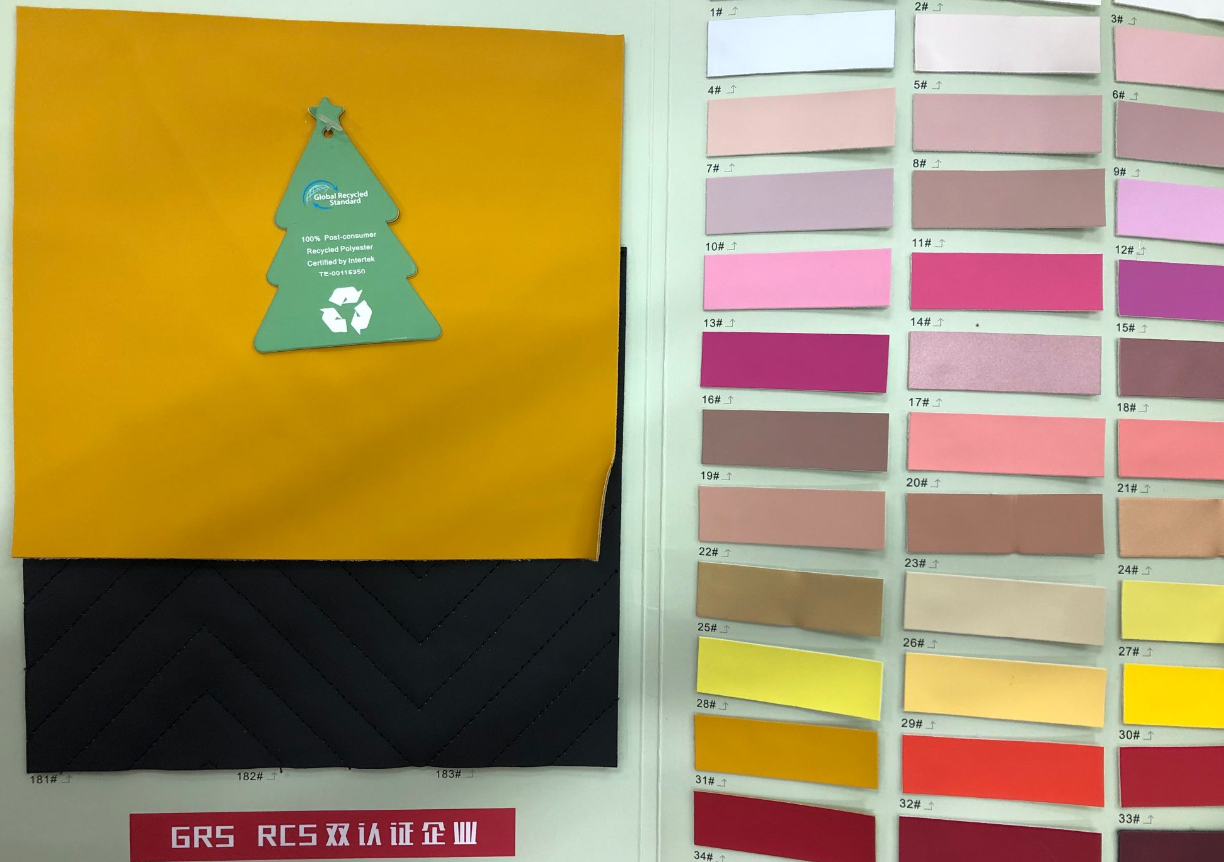
RPET (Recycled PET) Fabrics: Made from recycled plastic bottles, waterproof, durable, and reduces plastic waste
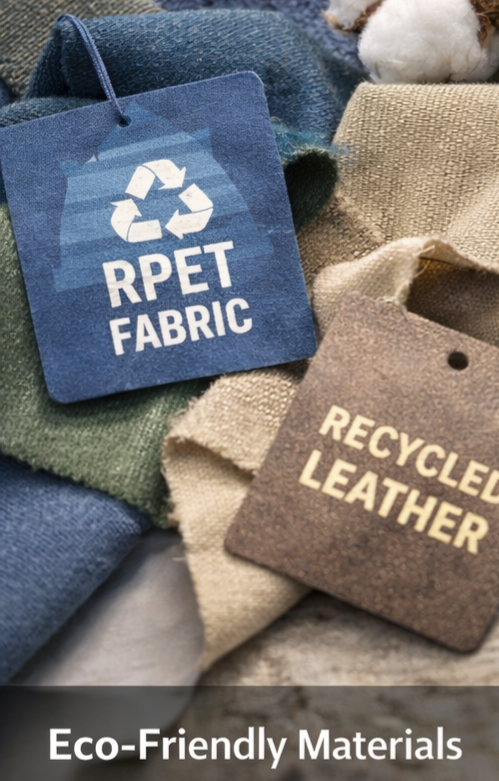
Organic Cotton: Pesticide-free, biodegradable, ideal for shopping and casual bags
Recycled Leather: Substitutes traditional leather, minimizing livestock-related carbon footprint
2. Production Dimension
Centralized Low-Carbon Production: Large-scale factories reduce energy consumption compared to small workshops
Modern Production Lines: Efficient processes minimize waste and rework
3. Certification Dimension
GRS (Global Recycled Standard)
RCS (Recycled Claim Standard)
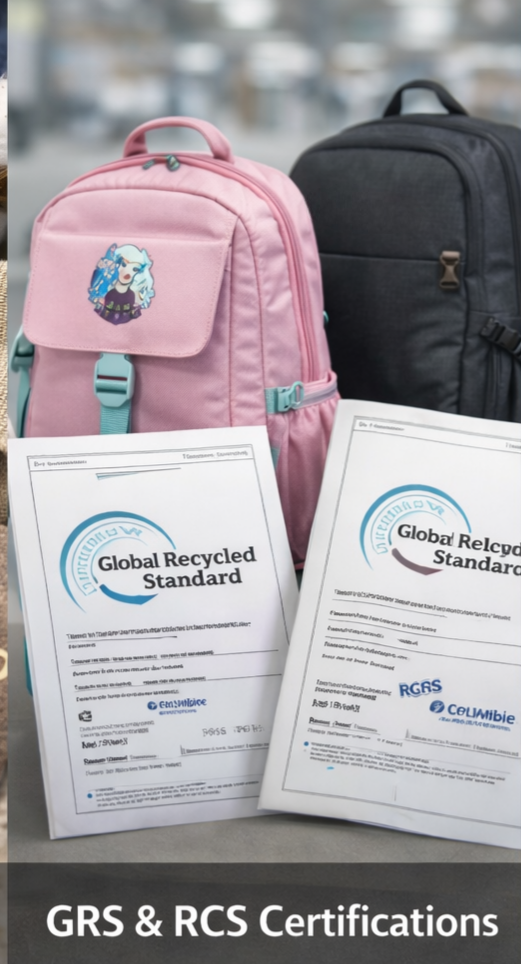
Certification ensures traceable raw materials, eco-friendly production, and compliance with international sustainability standards
GRS vs RCS Certification: Key Differences
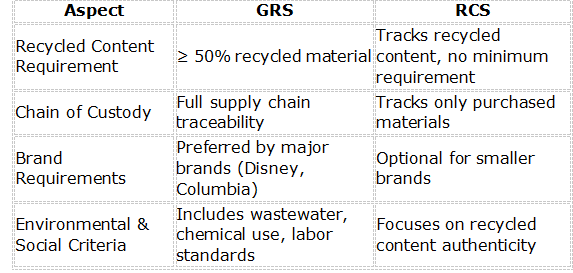
Why Major Brands Require GRS
Transparent, fully traceable supply chain
Compliance with international environmental and social responsibility standards
Our factory is certified by Disney , ensuring a reliable supply chain
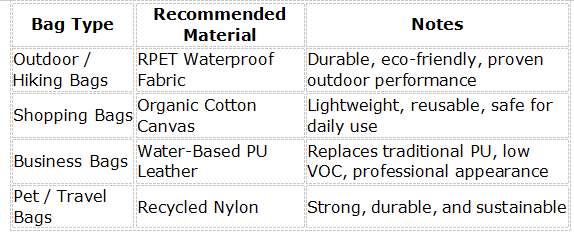
We have extensive experience applying eco-friendly materials across bag types, ensuring every batch meets functional and sustainability requirements.
Hidden Costs of Green Manufacturing
1. Factory Scale vs Carbon Footprint
Our 27,000㎡ centralized production facility reduces energy consumption through unified management
Compared to multiple small workshops, carbon emissions are significantly lower
2. Quality Control Reduces Waste
ISO9001-certified quality management system
Process control minimizes rework and defects
Ensures mass production matches samples while reducing material waste
Choosing sustainable manufacturing is not only an environmental commitment but also a long-term cost saver that strengthens brand credibility.
Conclusion
When selecting a sustainable bag supplier, it’s essential to consider materials, production processes, certification, and quality management across the entire supply chain.
We provide eco-friendly materials including RPET, organic cotton, and recycled leather, backed by GRS and RCS certification and experience with major brands like Disney and Columbia.
Our centralized, low-carbon production ensures large-scale, reliable, and sustainable bag sourcing.
Contact us today to start your eco-friendly bag sourcing journey!
Get in touch
If you have any questions about our products or services, feel free to reach out to the customer service team. We provide unique experiences for everyone involved with our brand. We offer preferential prices and high-quality products for you.
Recommended
They are all manufactured according to the strictest international standards. Our products have received favor from both domestic and foreign markets.
They are now widely exporting to 200 countries.
We sincerely welcome all friends from home and abroad. We believe we will be your best choice, and you will enjoy a successful cooperation.